Configuration
Brands & competitors
The Brands page is the configuration hub: the brands you monitor, the questions each one tracks, and the competitors it is measured against — in three sections on one page.
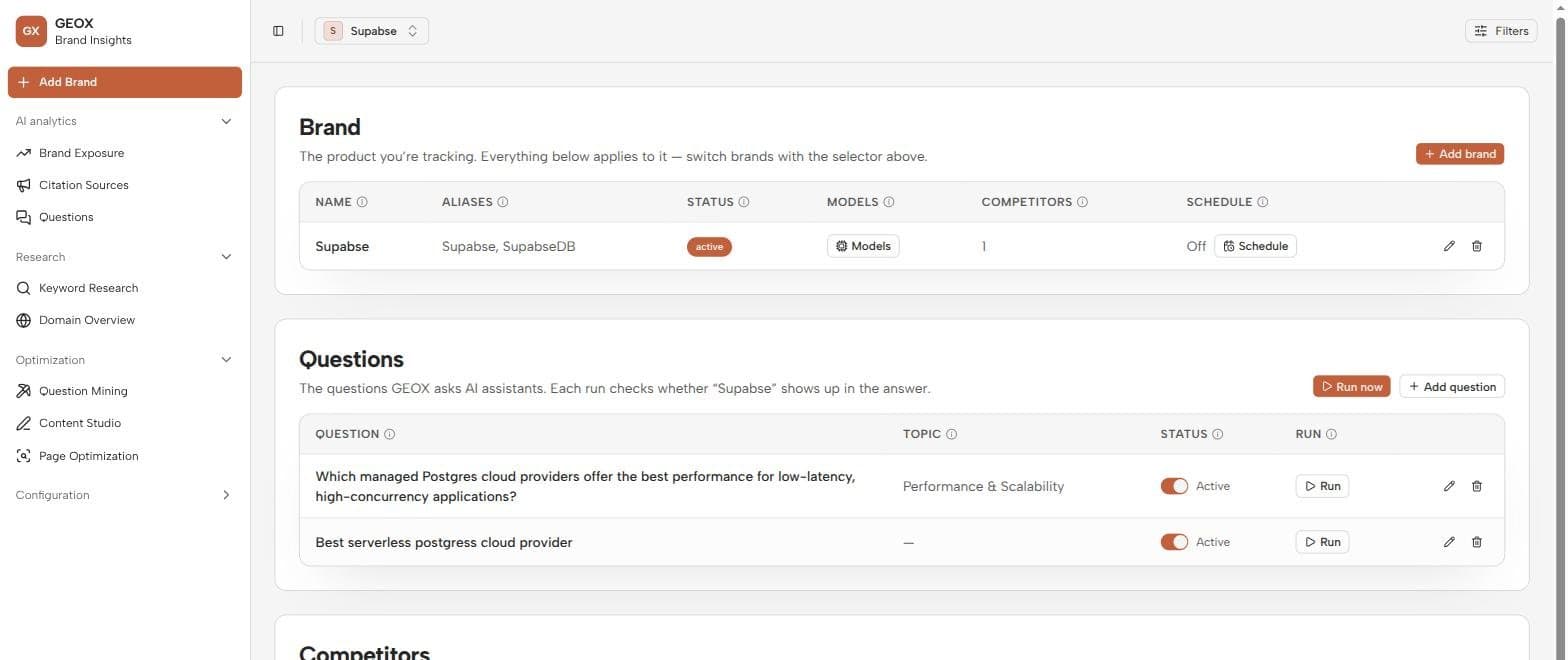
Brands
The first section lists your brands. Add brand opens the same guided setup as the sidebar’s + Add Brand button (brand → questions → competitors). Each brand row carries:
- Name and aliases — aliases are comma-separated variants (“Acme”, “acme.io”, “Acme App”) so the analysis catches mentions however they’re phrased. Editable anytime.
- Status — Active brands are collected; Paused brands keep their history but are skipped.
- Schedule (clock icon) — automatic collection cadence: daily, weekly, monthly, or a one-time run, in your local time zone.
- Edit / Delete — deleting removes configuration; stored responses are the source of truth and aren’t thrown away.
Questions
The middle section lists every tracked question for the selected brand — both hand-written ones and questions promoted from Question Mining. From here you can:
- Add a question — write the prompt, optionally tag it with a topic for thematic breakdowns.
- Run — the section header’s Run now collects all active questions; the ▶ on a row runs just that question (even if paused).
- Toggle Active / Paused — paused questions are skipped on runs but keep their history.
- Open a question to see its full answer history.
Writing good questions
Write what a real buyer would type: category questions (“best CRM for startups?”), comparisons (“X vs Y — which is better?”), and use-case questions (“how do I track AI brand mentions?”). Avoid questions that contain your brand name — you want to measure whether AI brings you up unprompted.
Competitors
The last section is the rival list: each competitor has a name and aliases, matched by the same rules as your brand. They power the mention share chart and the competitor gaps matrix on Brand Exposure, and the “cites competitors but not you” list on Citation Sources. Three to six direct competitors is the sweet spot — more dilutes the share-of-voice reading.